
AC diagnostic
Find out what is wrongbefore you spend anything.
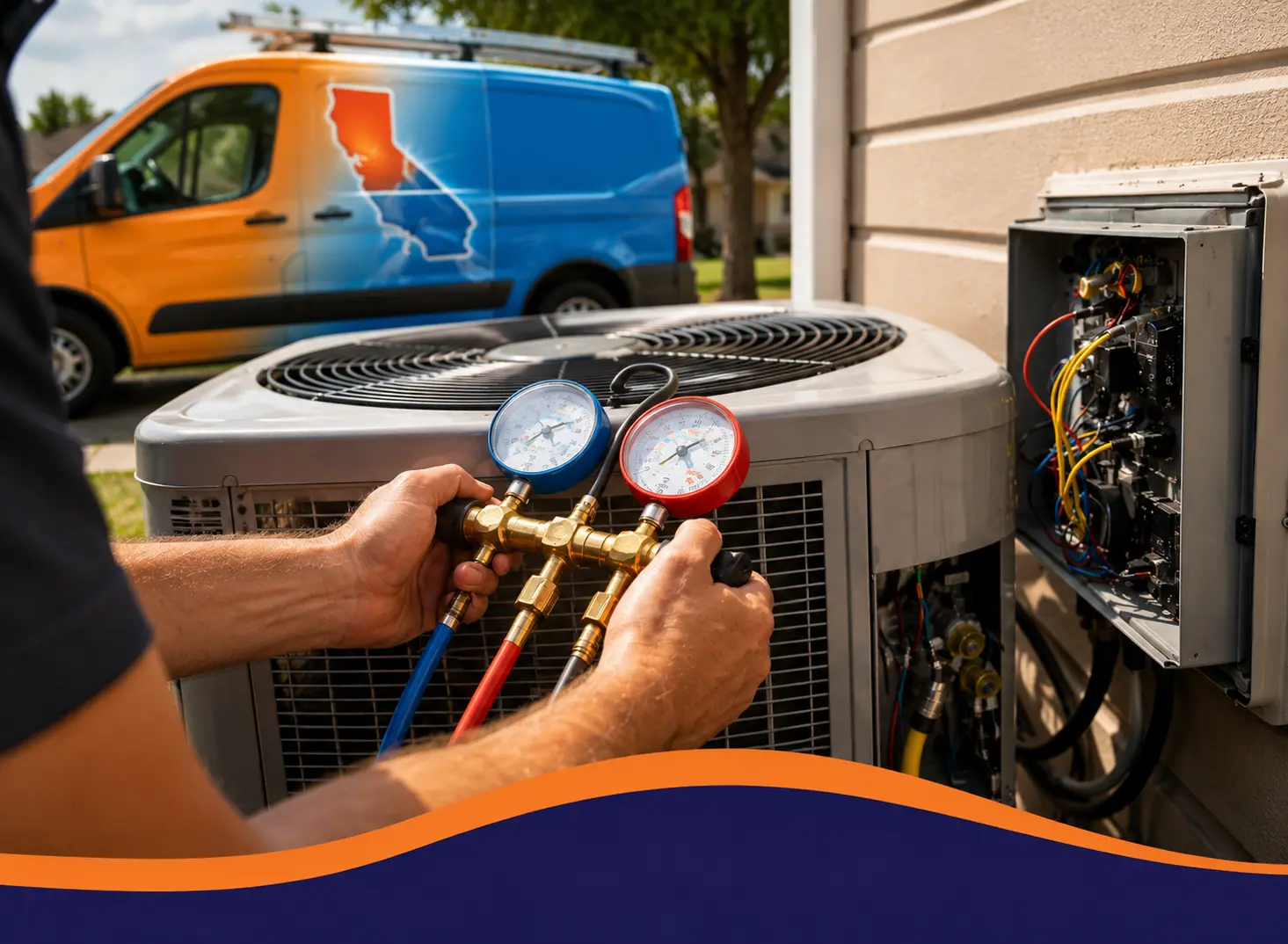
A full instrumented diagnostic on your air conditioner, priced flat and confirmed when you book. You get the actual readings, photos of what we found, and every option quoted — then you decide what happens next.
Flat fee, known upfront Waived on approved repair Readings are yours
Why it is a paid service
Diagnosis is the work, not the sales call before it
Most of the industry treats the visit as free and recovers the cost from whoever ends up buying a system. That arrangement quietly decides what your technician is looking for before he arrives, because the visit only pays if something gets sold.
We charge a flat fee for the diagnostic instead. It means the technician is paid for establishing the truth about your system, whether that turns out to be a $200 capacitor, a $12,000 replacement, or nothing at all. Then we waive the fee when you approve the repair.
A free visit is not free. You just pay for it later, in a recommendation that was made before anyone looked.
Exactly what gets measured
Ten readings, the instrument each one takes, and what it actually rules in or out. Bring this list and hold any technician to it, including ours.
Superheat
Manifold gauges & pipe clampWhat it reveals
How much the refrigerant has warmed past its boiling point leaving the evaporator. On fixed-orifice systems this is the primary charge check, and it also exposes a starved or flooded evaporator, which is how an airflow problem gets misread as a refrigerant problem.
Subcooling
Manifold gauges & pipe clampWhat it reveals
How far the liquid refrigerant has cooled below its condensing temperature. On TXV systems this is the charge check, and reading it alongside superheat separates a genuine undercharge from a restriction or a failing metering device.
Total external static pressure
Digital manometer & probesWhat it reveals
How hard the blower is fighting to move air. Most residential equipment is designed around half an inch of water column, and a great many Fresno systems measure well above that — undersized returns, crushed flex, blocked coils. High static kills blowers and quietly caps the capacity you paid for.
Temperature split
Calibrated thermometersWhat it reveals
The difference between return and supply air, which is the plainest measure of whether cooling is actually being delivered. Typically 16 to 22 degrees, and in Fresno's dry summer air it often runs higher — which is exactly why a number read without context tells you very little.
Capacitance
Capacitor testerWhat it reveals
Run capacitors are rated in microfarads within a tight tolerance, usually around six percent. They degrade gradually and measurably, so one drifting below tolerance is on its way out even while the system still runs. This single reading prevents a large share of Fresno's July no-cooling calls.
Amp draw
Clamp meterWhat it reveals
Current drawn by the compressor and motors, compared against the rated load on the data plate. A motor pulling high amps is working against something — a bad bearing, a weak capacitor, a fouled coil — and it is usually measurable well before it fails outright.
Voltage and contactor condition
MultimeterWhat it reveals
Supply voltage under load, and voltage drop across the contactor. Pitted contacts starve the compressor of the voltage it needs to start, which produces intermittent faults that look mysterious until somebody actually measures them.
Condenser coil and approach
Inspection & temperature readingsWhat it reveals
How well the outdoor coil is rejecting heat. Central Valley dust and ag particulate pack coils faster here than almost anywhere, and a loaded coil raises head pressure, drives up the bill every month, and eventually takes the compressor with it.
Refrigerant leak check
Electronic detector & visualWhat it reveals
Where refrigerant is escaping. Refrigerant is not consumed, so a system that is low has a leak somewhere. Topping it up without finding the leak is selling the same problem twice, and we will tell you that rather than book you in again next summer.
Condensate and safety controls
Drain test & switch verificationWhat it reveals
Whether the drain flows and the float switch actually cuts the system when the pan fills. A blocked drain is a common summer cause of a system that looks completely dead, and a bypassed float switch is how a slow leak becomes ceiling damage.
This is the cooling-specific version of the diagnostic. Our full process covers the same standard across heating, ductwork and replacement work.
Why the readings matter more than the symptom
The same complaint has several possible causes, and they look identical from the driveway. This is what separates a diagnosis from a guess.
-
"It runs but blows warm air"
Could be a failed capacitor, a pitted contactor, low charge from a leak, a seized condenser fan or a frozen coil. Capacitance and voltage separate the electrical causes; superheat and subcooling separate the refrigerant ones; static pressure catches the airflow one.
-
"It freezes up"
Almost always either restricted airflow or low refrigerant, and the fix is completely different depending which. Static pressure and temperature split point to airflow. Superheat and a leak check point to charge. Guessing here is how people end up paying for refrigerant that was never the problem.
-
"It cools, but not like it used to"
Gradual loss usually means a fouled condenser coil, a slow refrigerant leak, rising duct leakage or a blower fighting high static. Approach temperature, subcooling and static pressure read together will tell you which one, and often that it is more than one.
-
"It trips the breaker"
Amp draw against the data plate is the first read. A compressor pulling locked-rotor amps is a very different conversation from a weak capacitor forcing a motor to work harder, and only one of those is an expensive problem.
-
"One room never gets cold"
Rarely an equipment fault. Static pressure, temperature split and duct inspection usually locate it in the distribution rather than the machine — which matters, because replacing the equipment would not have fixed it.
How the visit runs
Usually 45 to 90 minutes, depending on what the readings turn up.
1
You describe it
What it is doing, when it started, and what has been done to it before. History narrows things fast.
2
We measure
The full set of readings above, indoors and out, with the system running under real conditions.
3
We photograph
The actual fault in your actual system, so you are looking at evidence rather than taking a word for it.
4
We explain
What failed, why it failed, and what happens if nothing is done. In plain language, without the tablet turned around.
5
You decide
Every reasonable option priced. Approve it, think about it, or take the findings elsewhere.
Most repairs are completed in the same visit. See how we document what we find.
What you walk away with
The findings are yours, whatever you decide
Plenty of companies keep the diagnosis in their own system and hand you a price. If you want a second opinion at that point, you are starting from nothing.
We give you the readings and the photos regardless of whether you use us for the repair. Take them to another company if you like. A diagnosis that only works while you stay with us is not a diagnosis, it is leverage.
Included with every diagnostic
- The measured readings, not a verdict without numbers behind it
- Photos of the fault, yours to keep and yours to share
- A warranty check on model and serial before anything is quoted
- Every option priced, including the one that costs us the least
- A straight answer on whether the system is worth keeping
The fee
One flat number, confirmed before we come out
You hear the diagnostic fee on the phone when you book, not when the technician is standing in your hallway. It covers the full set of measurements above, the photos, and every option priced — and it is waived from your invoice when you approve the repair.
If we find nothing wrong, you still get the readings and we still tell you your system is fine. That happens more often than you would expect, and it is a perfectly good outcome.
What a diagnostic with us is not
Worth stating plainly, because several of these are common enough that people expect them.
- Not a sales visit with a multimeter as a prop. If the answer is a repair, we say so.
- Not a refrigerant top-up with no leak search. Adding refrigerant to a leaking system is selling the same problem twice.
- Not parts swapped until something works. That is guessing on your invoice.
- Not a replacement recommendation based on the system's age. Age is not a diagnosis.
- Not a price that expires today. Nothing we quote is worth less tomorrow.
What Fresno homeowners say
★★★★★
I had a great experience with this AC service company! From the moment I called, they were professional, responsive, and knowledgeable. The technician arrived on time, diagnosed the issue quickly, and explained everything clearly.
Angelica Torres · Google review
★★★★★
I realized something was wrong with my AC when I got home Tuesday afternoon and noticed it wasn't blowing cold air. I called them right away, and they were able to send a technician to my Fresno home that same evening. The repair only took about 45 minutes, and everything was back to normal once the work was done.
Debbie Kram · Google review
★★★★★
Wow! Just an amazing experience! Air conditioner went out and they were able to get it fixed the same day! Wonderful crew and extremely nice. Would definitely use again.
Paige Pender · Google review
Diagnostic questions
How long does an AC diagnostic take?
Usually 45 to 90 minutes. A straightforward electrical fault reads quickly, while an intermittent problem or a suspected leak takes longer because it has to be found rather than assumed. If a repair is approved and the part is on the truck, most jobs are finished in the same visit.
Why not just tell me the price over the phone?
Because the same symptom has several possible causes with very different costs. "Blowing warm air" could be a $200 capacitor or a $3,000 compressor, and anyone quoting either one over the phone is guessing. We publish typical price ranges so you are not walking in blind, then measure before committing to a number.
What if you cannot find anything wrong?
Then we tell you the system measures within specification and you keep the readings as a baseline. It happens regularly, particularly with intermittent complaints, and a documented set of normal readings is genuinely useful the next time something changes.
Is the diagnostic fee really waived if I approve the repair?
Yes, it comes off the invoice. The fee exists so the diagnosis is paid work rather than a sales call, not as an additional charge on top of a repair you have already agreed to.
Can I watch the technician work?
Please do. Ask what a reading means and what it rules out. Every measurement on this page has a plain-language explanation behind it, and a technician who cannot give you one has not really diagnosed anything.
Do you diagnose systems you did not install?
Yes, on all major brands regardless of who installed the equipment or who has serviced it previously. See the brands we work on.
Book the diagnostic
Real measurements, photos of what we find, and every option priced before anything is touched.
California Heating & AC Repair is operated by Craftline Renovations, Inc. · CSLB License #999179 · Licensed and insured.